
The Moveable Marquee
Notes on Classic Cinema

Issue # 61 / January 1, 2026
Included in this issue:
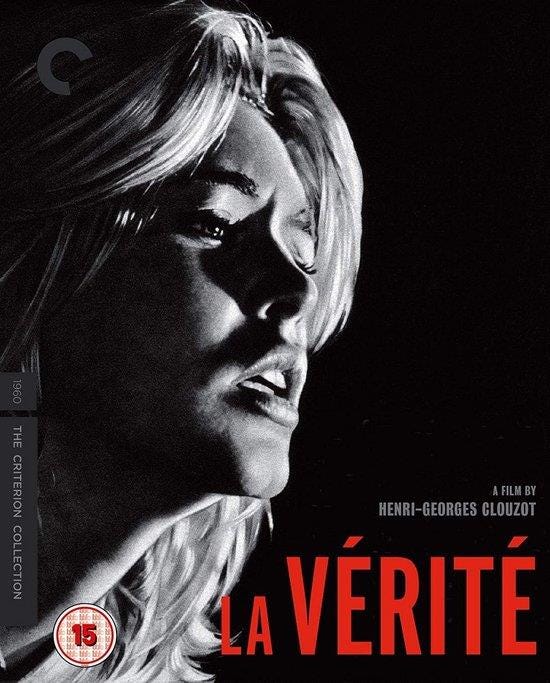
Entrée : Brigitte Bardot in La vérité
Film Commentary: No Greater Glory.
Classic Film Capsules: History Is Made at Night, and The Big Trail.
Quotes: Brigitte Bardot.
Entrée : Brigitte Bardot in La vérité
It’s typical of celebrity obituaries nowadays: Death is announced by a family member or organization with no mention of when or where the famous person died, or from what cause. Usually, those details do not really matter, and since Brigitte Bardot was a superannuated 91, one may imagine that her heart simply slowed to a halt. Gracefully, one hopes.
By the time this issue appears, her obits and tributes will have flooded the media. So, I won’t bother writing about her life and professional career, her advocacies, politics, and so on. Or that she’d been away from cinema for more than five decades. I’ll just talk briefly about the one film she made that she was proud of, or so she said.
In Henri-Georges Clouzot’s La vérité [The Truth] (1960), Bardot is Dominique Marceau, something of a hedonist. She has a troubled home life, always in the shadow of her high-achieving older sister, who is a superb violinist. She lures away her sister’s fiancé (a prudish young musical prodigy) and, seizing his inner passion, has a volatile affair with him, driving him to such distraction that his career as a conductor is nearly ruined. She loses interest and dumps him, turning to prostitution when she runs short of cash. Later, when she wants him back and he refuses, she shoots him to death before attempting to kill herself.
Was it a crime of passion or premeditated murder? It’s an important distinction because in France in those days murder aforethought was rewarded with the guillotine. The story begins and ends in the courtroom, with frequent backflashes dramatizing her precarious nightlife and love follies, which become dirty laundry picked apart by grandstanding prosecutors while she sits helpless.
Playing a character with wildly erratic emotions, Bardot showed in La vérité that she was not merely a sex icon, but a convincing actor. In fact, if she never made another film after this one, it should have made her reputation solid—at least in a just universe. It was expertly directed by Clouzot, nearing the end of his career, and wonderfully photographed by Armand Thirard. You can find it on YouTube, which has a good quality copy.
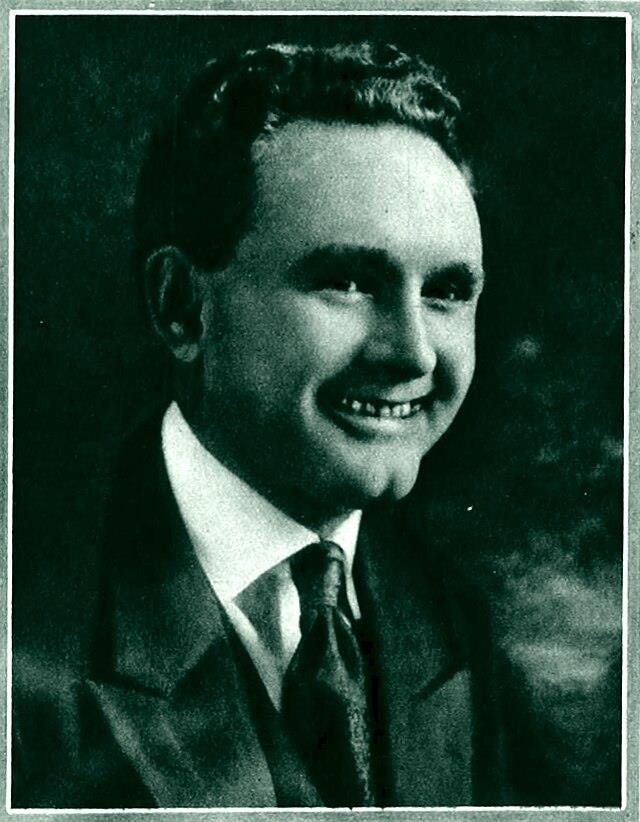
Frank Borzage
Film Commentary:
Hollywood’s Most Unusual Anti-War Film: Frank Borzage’s No Greater Glory
By Steven Huff
No Greater Glory (1934). Directed by Frank Borzage. With Frankie Darro, George P. Breakston, Jimmy Butler, Jackie Searl, Donald Haines, Ralph Morgan, Lois Wilson. Written by Ferenc Molnár (novel) and Joe Swerling (screenplay). Cinematography by Joseph H. August. Music composed by R. H. Bassett. Black and white. 1 hr., 14 mins.
Streaming on YouTube
Director Frank Borzage (1897-1961), a native of Salt Lake City, Utah, acted in his first film in 1912 and directed his first short a year later. He won the Oscar for Best Director at the first Academy Awards Ceremony in 1927 for Seventh Heaven. In his long career he directed such films as A Farewell to Arms (1932), Moonrise (1948), History Is Made at Night (1937, see “Classic Film Capsules” below), finishing with a biblical flop, The Big Fisherman (1959).
No Greater Glory opens abruptly with battle footage from Lewis Milestone’s All Quiet on the Western Front, a World War I film released in 1930. It cuts to a scene in which a shell-shocked, wounded soldier denounces war and the military leaders and politicians who’d dragged untold numbers of soldiers into the deathtrap of battle. He swears he’ll refuse to fight on, and he’s dragged off to a psychiatric ward. After this unconventional use of another filmmaker’s footage, the film cuts to a classroom of boys, where the teacher tells his students that patriotism is the highest human ideal, similar to a scene in All Quiet
The use of the footage from, and allusion made to, another film seem stark and heavy- handed in stating its antiwar theme. Borzage apparently thought that the main storyline would not get his point across. But it does. No Greater Glory can also be seen in the context of the contemporaneous rearming of Germany with the rise of Hitler. Trouble was also brewing in Austria, where civil war finally broke out a month before the film’s release in March of 1934.
The film approaches its subject in yet another unusual way. While there are a few adults in minor roles, the main characters are children who act in ways reflective of what has been impressed on them by adults. Adapted from the novel A Pál utcai fiúk (The Paul Street Boys) by Hungarian novelist Ferenc Molnár, the story is set in a Budapest neighborhood. A group of youths form a military-style gang to defend their playground in an abandoned lumberyard from encroachment by another gang.
George P. Breakston
Boka (Butler), The Paul Street Boys’ leader, rules and assigns ranks to a motley unit of adolescents. Nemecsek (Breakston), the gang’s smallest member, is the only private in a company of officers, and the only one not permitted the official hat that the other boys wear. The son of a poor tailor (Morgan), he’s physically frail; demeaned by Boka and the others, his name is regularly added to the Black Book for various infractions.
These boys playing soldiers might be comic if their intensions were not so serious. In fact, the only humorous moments are the incessant banana eating, even during battle, by Csonakos (Haines).
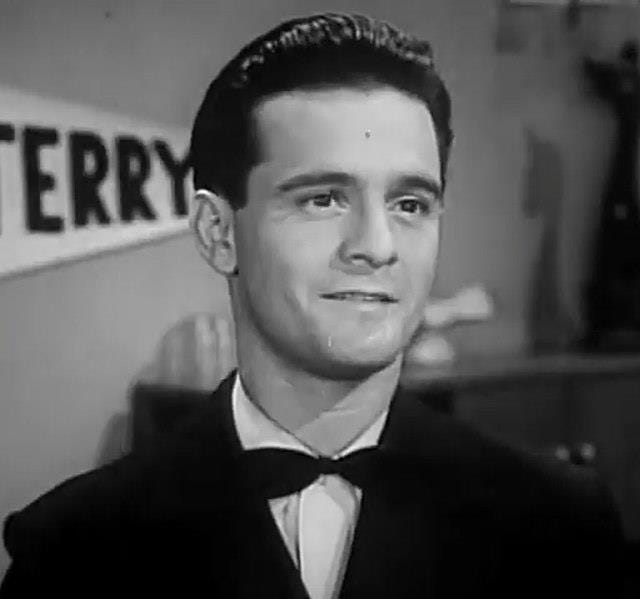
Frankie Darro
Their adversaries are a gang of older boys known as the Red Shirts (an apparent allusion to Germany’s Brownshirts), led by the charismatic Feri Ats (Darro). He rules his troops with an iron fist but is also the occasional voice of restraint. His boys meet at night in the city’s Botanical Gardens. Early in the film, the Red Shirts bully some Paul Street Boys who are playing with marbles under a bridge. They also have a mole among the younger boys, Gereb (Searl), who leaves the gate to the playground unlocked so that Feri Ats can steal the Paul Street Boys’ flag. After that incursion, war between the gangs seems inevitable.
Boka organizes two gang members to go with him on a night mission to sneak into the Botanical Gardens and retrieve the flag. Nemecsek begs to go, hoping to distinguish himself, get promoted and earn the all-important hat. They scale the garden’s fence and find themselves on the bank of a creek. Red Shirts are guarding a bridge over the water, but the intruders find a rowboat. Watching the Red Shirts’ meeting from behind trees, they’re stunned to see Debec among them wearing his Paul Street officer’s hat, instructing them how to get access to the playground.
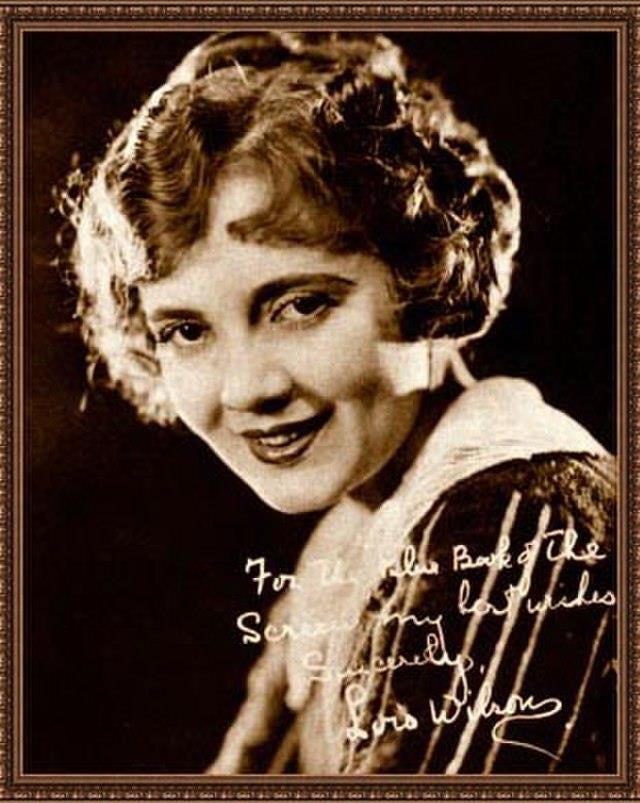
Lois Wilson
Nemecsek, ever loyal and inept, falls in the water twice during the covert operation. He then catches a cold and is confined to bed at home. As he becomes feverish, apparently with pneumonia, his life hangs in the balance. When the inevitable battle breaks out in the playground (as exciting and action-packed as some of the best screen battles), the feverish Nemecsek has a hallucination of Boka ordering him to fight. He leaves his sickbed and sneaks out of the house. In a striking sequence, he staggers several blocks, his face sallow; he joins the battle, and then finally falls exhausted. His mother (Wilson), realizing what he’s done, arrives at the playground to find her son dead. In a heartbreaking scene, she carries him home in her arms, followed by a parade of boys from both gangs.
The antiwar theme of No Greater Glory is underscored in the end when the boys realize that the playground that they fought so hard to preserve is about to be developed for real estate. So, they fought for nothing.
A further irony: two cast members, Jimmy Butler (Boka) and the banana-eating Donald Haines (Csonakos) died fighting in World War II. Ferenc Molnár, author of The Paul Street Boys, left Europe and came to the United States in 1940 to escape the Nazis.
In his review in The New York Times, Mordant Hall pointed to themes of “loyalty, sacrifice, and the glorification of military ideals.” Other critics made similar comments. But I think they missed the point that Borzage’s film is clearly an antiwar allegory, since the momentum of the boys’ actions drives the story toward foreseeable and needless calamity. While it lacks the punch of Stanley Kubrick’s similarly themed The Paths of Glory, it’s still effective and is, perhaps, the most anomalous antiwar story Hollywood ever produced.
Andrew Sarris, while calling Borzage “an uncompromising romanticist,” said he “never needed dream worlds for his suspensions of disbelief. He plunged into the real world of poverty and oppression…. His anti-Nazi films—Little Man, What Now and Three Comrades—were far ahead of their time, emotionally if not politically.” David Thomson wrote that Borzage’s Mortal Storm (1940) “is a more perceptive and frightening study of fascism than, say, The Great Dictator (1940, Charles Chaplin) or the Capra films.”
Other Notes:
Frankie Darro (1917-1976), who plays Feri Ats, began as a child actor in silent films. He was just starting to break into teen roles when he starred in No Greater Glory. In Wild Boys of the Road (1933), he plays Eddie Smith, a high school student in the Depression who takes a turn as a migrant train-hopper to relieve his parents of the burden of having to feed him. Even after returning to Hollywood after serving in WWII, he continued to play in youthful roles, since at 5 foot, 3 inches, he was too short to play many adult roles. He contracted malaria during the war, which affected his health for the rest of his life. It led to heavy drinking to control pain which eventually made him an unreliable actor. In one of his last roles, he wore the bulky costume of Robbie the Robot in Forbidden Planet (1956).
Ralph Morgan (1883-1956), who plays Nemecsek’s father, was an accomplished character actor, especially during Hollywood’s Golden Age, with roles in such films as The Power and the Glory (1933), Magnificent Obsession (1935), and The Life of Emil Zola (1937). His brother Frank Morgan was better known, principally for his role as the wizard in The Wizard of Oz.
Lois Wilson (1894-1988), who plays Nemecsek’s mother, was also a highly accomplished actor, beginning in the silent era through the Golden Age, earning plaudits for roles in The Covered Wagon (1923), the first filming of The Great Gatsby in which she played Daisy (1926), and School for Girls (1934).
Sources and Paths to Further Exploration:
Hall, Mordaunt. “The Screen”. The New York Times, May 5, 1934, p. 22.
“No Greater Glory.” Inforuge No Greater Glory (1934) B&W 1.37:1.
“No Greater Glory, 1934.” Obscure Hollywood.
Sarris, Andrew. The American Cinema: Directors and Directions 1929-1968. Da Capo Press, 1996.
Thomson, David. The New Biographical Dictionary of Film. Updated and Expanded. Alfred A. Knopf, 2013.
Thanks to Barry Voorhees for editing
Thanks to Tim Madigan for suggestions
Classic Film Capsules:
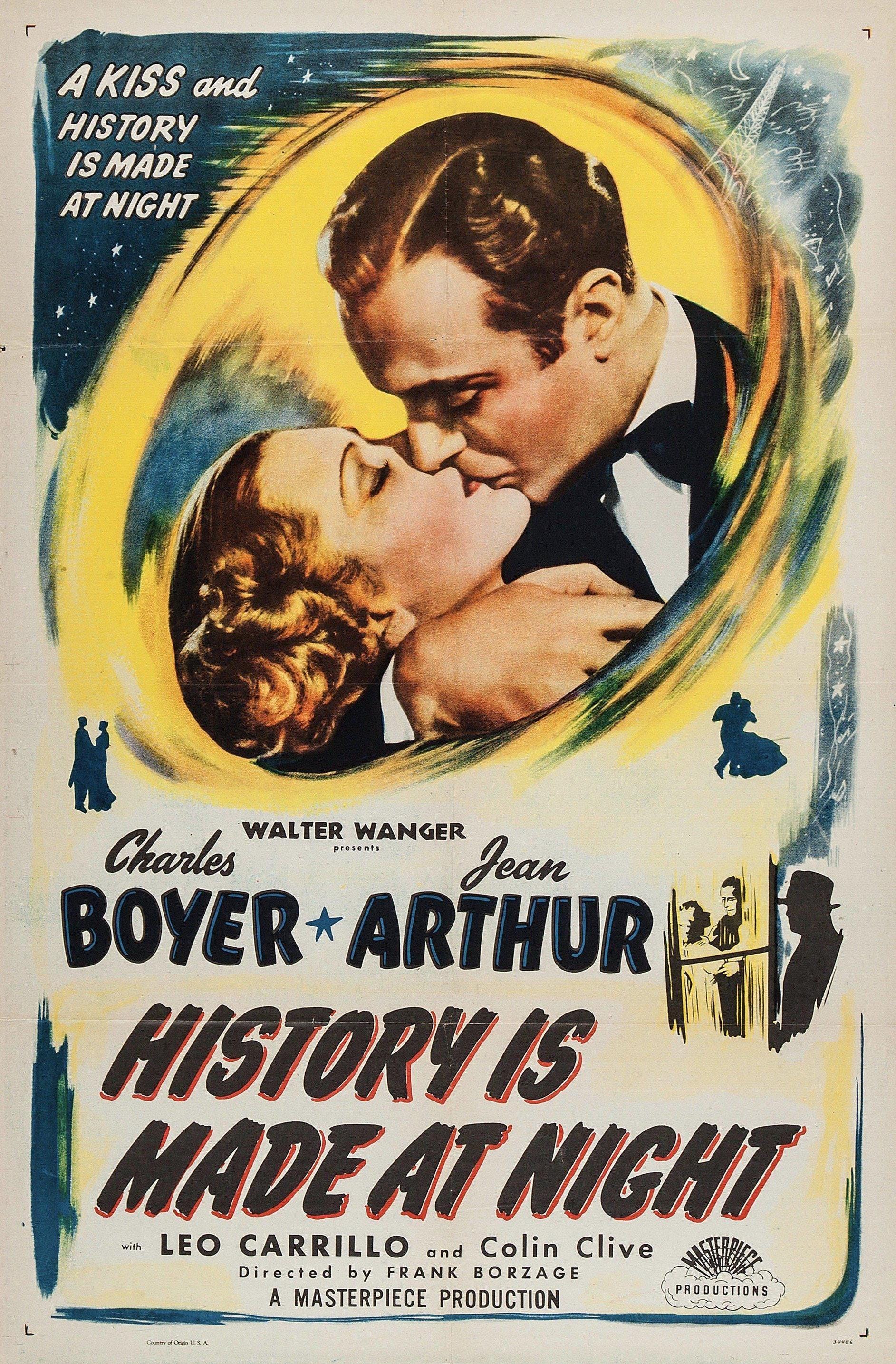
History Is Made at Night (1937). Directed by Frank Borzage. With Jean Arthur, Charles Boyer, Colin Clive, Leo Carrillo. Black and white. 1 hr., 37 mins. Streaming on YouTube.
Frank Borzage’s History Is Made at Night is the kind of serio-comic romance that the 1930s decade was famous for, in which love overcomes impossible odds and improbable twists. It’s aimed at audiences who are exceedingly generous in suspending disbelief, and it gives full bloom to Boyer as the romantic lead. Irene Vail (Arthur) is an American woman who wins a divorce decree in London from her insanely jealous and possessive husband Bruce Vail (Clive), a fabulously wealthy British owner of ocean liners. By English law, the divorce will be final only if Irene remains “blameless” for six months. So, Vail pays Irene’s chauffeur to enter her Paris apartment at night, to forcibly embrace and kiss her, so that Vail and his private dick can burst in and catch her in the act. But Paul Dumond (Boyer), a renowned Parisian headwaiter, happens to witness the hubbub through a window. He enters pretending to be a thief, cold cocks the chauffeur, locks Vail and his dick in a closet, and “kidnaps” Irene. Thus begins a romantic intrigue between Dumond and Irene, including a contrived murder rap for Dumond, and the lovers’ escape on one of Vail’s ships that collides with an iceberg. While it lacks the masterful touch that Ernst Lubitsch or Leo McCarey might have given the story, it has the satisfying romance, tension and comic turns that make for a good watch. People of a certain age will remember Leo Carillo, who plays the chef in Dumond’s restaurant, as Pancho in the 1950s TV western series The Cisco Kid. Colin Clive was Dr. Frankenstein in James Whale’s films Frankenstein (1931) and The Bride of Frankenstein (1935).
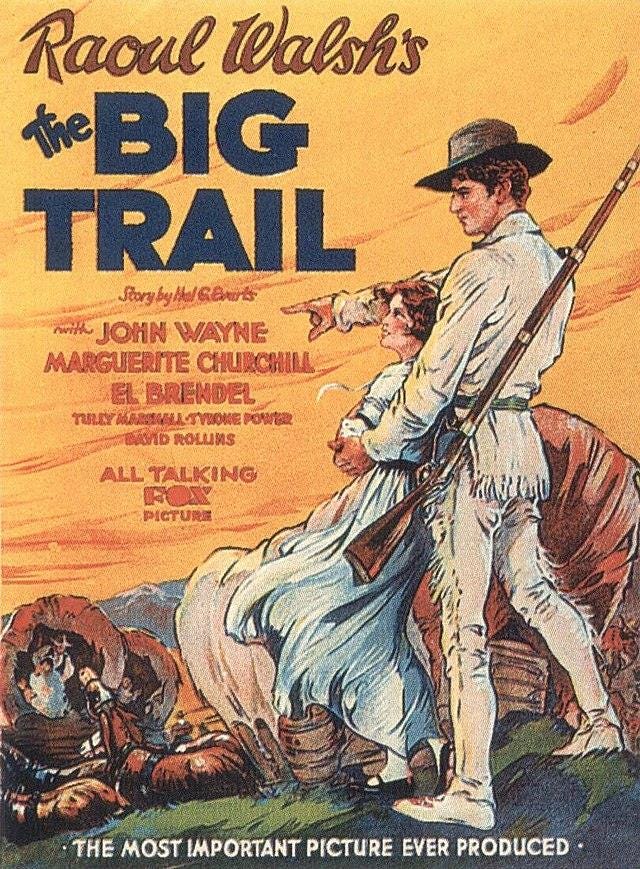
The Big Trail (1930). Directed by Raoul Walsh. With John Wayne, Marguerite Churchill, Tyrone Power, Sr., Tully Marshall, Ward Bond. Black and White. 2 hrs., 5 mins. Streaming on Prime
In his first starring role, John Wayne plays Breck Coleman, a scout and trapper who leads a wagon train from Missouri to Oregon. On the way, he falls in love with Ruth (Churchill), fights to the death with Lopez (Stevens) and grizzled Red Flack (Power, Sr.) whom he suspects murdered another trapper, and he fights attacking Indians. This film has grandeur, almost startlingly so, especially when one expects the nearly square frames of old pictures and instead sees a panoramic widescreen. Fox Films—which would become 20th Century Fox a few years later—was experimenting with 70-millimeter cameras. After The Big Trail and a few other wide screen adventures, it was abandoned. Theaters and audiences were not ready for it, and the revenue just didn’t make it worthwhile. But The Big Trail is a bona fide epic, and even though it bombed at the box office, the widescreen format pays off aesthetically, depicting the panoramic western plains with wagon trains stretching to the horizon. I should offer similar plaudits to James Cruz’s 1923 silent The Covered Wagon, with easily as many wagons, and with a love triangle to steepen the plot. But it hasn’t the grandeur of The Big Trail’s wide screen. Sometimes actors seem to be shouting their lines. That’s because it was the early days of sound films and they were trying to be heard by concealed microphones that were nowhere near as efficient as those used later. It was the final film for Tyrone Power, Sr. (father of the more famous and handsomer son) who died shortly after the film was completed. Ward Bond appears as Sid Bascom, in his eighth of 278 film roles. Chief John Big Tree, a Seneca, who had an uncredited Native role, was an actor who later played Chief Pony That Walks in She Wore a Yellow Ribbon (John Ford, 1949) and acted in some sixty other film roles. He claimed to be one of three Native American chiefs who served as models for the Indian Head nickel.
Quotes: Brigitte Bardot
"Fame has only the span of the day; they who live longest are forgotten first."
“They wanted me to be a myth, and I refused.”
Text copyright 2025 by Steven Huff