
The Moveable Marquee
Notes on Classic Cinema

Issue # 66 // March 15, 2026
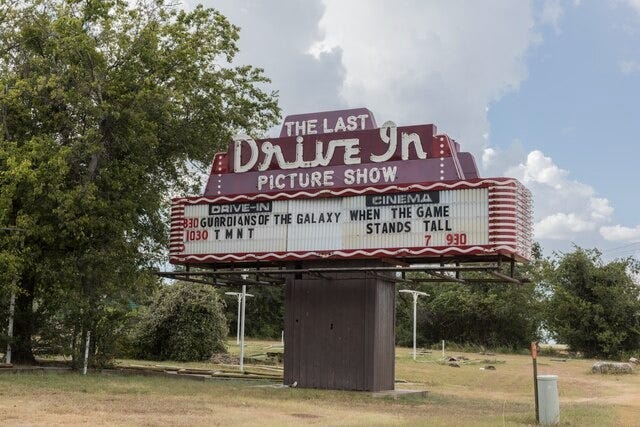
(Photo by Carol M. Highsmith)
Contents of this issue:
Entrée: On Last Pictures
Film Commentary: The Valley of the Bees
Classic Film Capsules: The Hanging Tree; Three Godfathers
Sources and Acknowledgements
Entrée: On Last Pictures
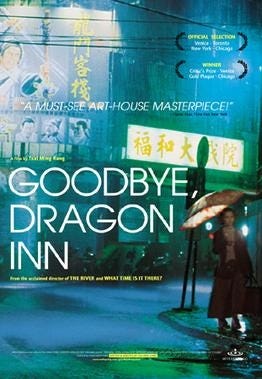
In Tsai Ming-liang’s 2003 film Goodbye, Dragon Inn, a mere handful of people sit in the Fung-Ho Grand Theatre in Taiwan to watch the final show before it closes its doors forever. The film they’re watching happens to be a classic, Dragon Inn ( King Hu,1967), a story of a heroic Chinese past where valiant swordsmen (and a swordswoman) fight to protect the family of a murdered general from a tyrannical eunuch and his band of bloodthirsty brigands.
Ming-liang’s film is “slow cinema,” not to everyone’s taste, with long takes of the few patrons scattered among the vast theater of empty seats. A woman ticket-taker wears a leg brace and walks painfully through the halls. Men stand at urinals during intermission. Occasionally the camera turns to action sequences on the screen.
When the show is over, the projectionist rewinds the film while two elderly men talk in the lobby. They are Chun Shih and Miao Tien from the cast of Dragon Inn. Miao Tien says, “I haven’t seen a movie in a long time.” Chun Shih replies, “No one goes to the movies anymore, and no one remembers us anymore.” The ticket-woman limps home in a downpour of rain.
Yet the film is entrancing. It is, of course, an elegy for the end of a century of film culture, with a wary eye to the future of digital cinema and the stay-at-home audiences of the twenty-first century.
Peter Bogdanovich’ film of Larry McMurtry’s novel, The Last Picture Show (1971), is set in a North Texas town in 1951. The movie theater is closing because the town is dying. The last show is another classic, Howard Hawks’s Red River (1948), also about a heroic past, the settling of a vast Texas territory by a mean cattle baron, played by John Wayne. Bogdanovich’s film is also, among other things, an example of cinema art looking inward at its own impermanence.
Yet, cinema is still lively, even if it plays to smaller crowds. Support your local theaters! We still need them!
I don’t recall the final film that the Astor Theatre showed before it closed in my hometown of Attica, New York. I only remember that there wasn’t much to do in that little berg afterward. Go to church, I suppose.
Goodbye, Dragon Inn (Tsai Ming-liang, 2003). With Kang-sheng Lee, Shiang-chyi Chen, Chun Shih. Streaming on Prime.
Dragon Inn (King Hu, 1967). With Polly Ling-Feng Shang-Kuan, Chun Shih, Ying Bai, Miao Tien. Taiwan, Hong Kong. Streaming on Criterion.
The Last Picture Show (Peter Bogdanovich, 1971). With Jeff Bridges, Timothy Bottoms, Cybill Shepherd, Ben Johnson, Cloris Leachman. Streaming on Prime.
Red River (Howard Hawks, 1948). With John Wayne, Montgomery Clift, Joanne Dru, Walter Brennan. Streaming on Prime, MGM+, Fawesome, Roku and other services.
Film Commentary:
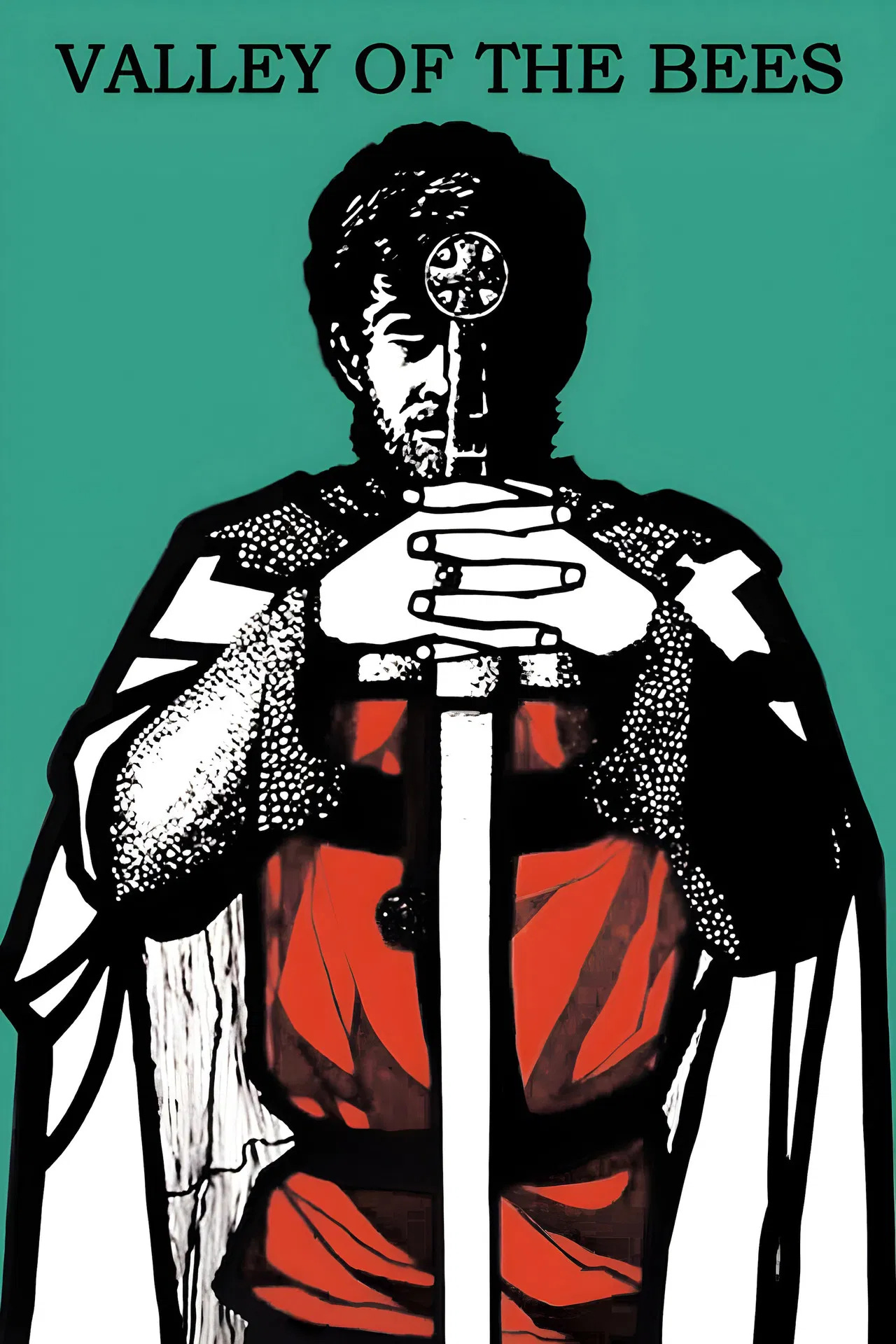
The Valley of the Bees (1968). Directed by František Vláčil. With Petr Čepek, Jan Kacer, Vera Galatíková, Zdenek Kryzánek, Josef Somr, Zdenek Sedlácek, Jana Hájková. Screenplay by Vladimír Körner from his story, and by Frantisek Vlacil. Cinematography by Frantisek Uldrich. Music composed by Zdenek Liska. Black and white. 1 hr., 37 mins. Streaming on Criterion.
Unlike many of his Czech colleagues, such as Milos Forman and Vera Chytilova, František Vláčil (1924-1999) did not attend FAMU, the Czech film school; instead, he studied art history and aesthetics at Masarek University in Brno. Of his seventeen feature films, he’s probably best known for his trilogy, The Devil’s Trap (1962), Marketa Lazarova (1967) and The Valley of the Bees (1968), all of which dramatize ideological conflicts in historical settings. His next film, Adelheid, is the story of conflict following World War II between Czech people and remnants of the Reich’s Army and German settlers. It was released in 1969, the year after the Soviet Army invaded Czechoslovakia and stamped out the liberal Prague Spring. Along with Valley of the Bees, it fell afoul of Communist authorities who saw both films as metaphors for the Soviet occupation, and Vláčil was unable to direct another film until 1977.
The Valley of the Bees is set in thirteenth-century Bohemia. The Lord of Vlkov (Kryzánek), who is a middle-aged widower, marries a teenaged girl, Lenora (Hájková). At the wedding banquet at his castle, his adolescent son Ondrej (Sedlácek), who has been tending bees instead of attending the ceremony, presents his stepmother with a basket of blossoms. She tosses them merrily in the air but finds, to her horror, that under the blossoms are squirming bats. One senses that Ondrej is undisciplined and a problem to his father. Infuriated, Kryzánek hurls his son against a stone wall. Instantly regretful, he cradles the boy in his arms and vows to the Virgin Mary that he’ll dedicate his son to God if she spares his life.
The story shifts north to a monastery near the Baltic Sea, where Ondrej is going through a ritual joining the order. The Knights of the Cross, or the Teutonic Order of monks, is rigidly militant, and their cross is the handle of their swords. They practice long purification fasts and infractions are punished severely. When he becomes an adult, Ondrej (Čepek) comes under the influence of Armin (Kacer), a zealous ascetic. Armin takes Ondrej to the shore near the skeletal remains of a shipwreck. They lie naked on their backs with their arms linked, allowing the frigid water to roll over them in something suggestive of a homoerotic ritual. Armin tells Ondrej, “You will feel chill, then pain. Your lower body will be numb, but your spirit will rise.” The site becomes sacred to their friendship.
But Ondrej was sent to the order by his father against his own inclinations, and he is increasingly unsettled. A decisive incident occurs when a monk named Rotger (Somr) escapes and tricks Ondrej into giving him his horse. Rotger is caught, brought back, and forced to cast himself from a tower, and his body is devoured by dogs. Ondrej is punished and confined to his cell. He escapes. Armin, who clearly loves Ondrej, goes in pursuit. But he is fended off violently by Ondrej when he catches up to him.
Returning home to Vlkov, Ondrej finds that his father is dead. Assuming the lordship, he receives dispensation from the local priest to marry his widowed stepmother Lenora (Galatíková), who as an adult has been running an impoverished castle. He begins tending his bees again. Under his rule the castle regains its prosperity. The priest tells Ondrej, “Bees are like people. They fear and sense disaster. You can destroy their homes, and they begin building new ones straight away.”
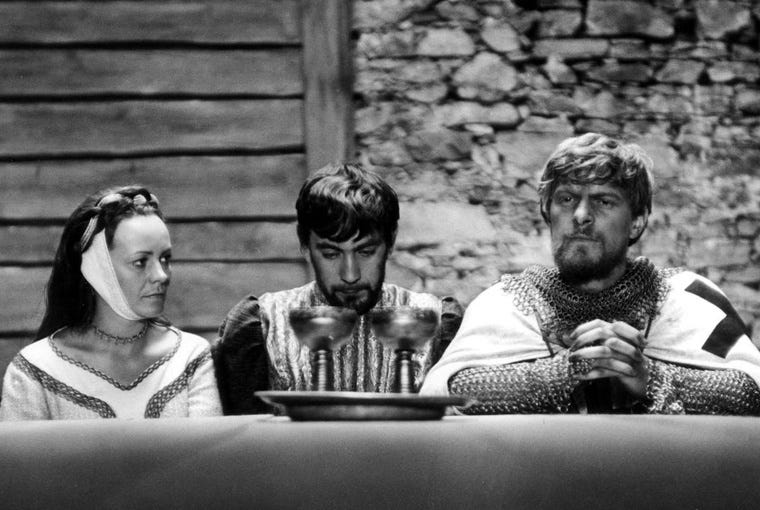
Vera Galatíková as Lenora, Petr Čepek as Ondrej, and Jan Kacer as Armin.
Armin arrives at the castle on the wedding day to reclaim his spiritual disciple. He finds himself in an earthy realm that seems as much pagan as Christian, and where dogs go mad when they smell blood or the pheromones of fear. He brings with him a small bag of sand from the sea, the place where they became friends. To reclaim Ondrej and free him from carnal sin, he murders Lenora. Ondrej sets his hungry dogs on Armin and they devour him.
In the final scene Ondrej is returning to the order. Before he enters, he kneels at the site by the sea. He has surrendered himself. What will he have to do to atone? Will he have to throw himself from a tower like Rotger?
There are multiple themes in The Valley of the Bees. An Oedipal conflict between the father and Ondrej plays out when he marries his father’s widow. There is the ideological rivalry, the rigidly Christian order against the genial local faith in Bohemia which, in effect, coexists with the earthy life of the castle, also symbolized by the apiary of bees. And both are uneasily linked by the theme of homoeroticism, Armin’s love for Ondrej. The ideological differences can be seen against the political strife in Czechoslovakia in 1968, the year that the film was made and the Soviet Army invaded. Certainly, the militant severity of the stonily dogmatic Teutonic Order can be seen as paralleling Soviet rule—that Ondrej chooses to return to it, would suggest that there is no escape. And the dogs? Well, whether carnal or pious, nature is hungry and ready to eat us.
Vlacil’s sets for Valley of the Bees are so authentically detailed—and I can say this for Marketa Lazerova as well—that they give us the best possible illusion, that it really is the thirteenth century, not just in the two acres of a shoot.
The Valley of the Bees was hard to find for many years. It was digitally restored by UPP and Soundsquare Studios by the Karlovy Vary International Film Festival in collaboration with the Národní filmový archiv, Prague. It had a recent showing at the Museum of Modern Art in New York. It’s now available to stream on the Criterion Channel, along with other films in the trilogy, The Devil’s Trap and Marketa Lazerova, as well as Adelheid and The White Dove.
Note: I reviewed Adelheid in the August 1, 2024 issue. See Archive.
Classic Film Capsules:
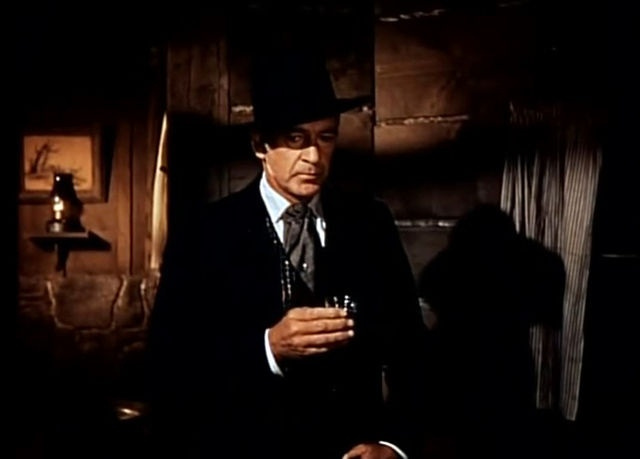
The Hanging Tree (1959). Directed by Delmer Daves. With Gary Cooper, Maria Schell, Karl Malden, George C. Scott, John Dierkes. Screenplay by Wendell Mayes and Halsted Welles, from a novel by Dorothy M. Johnson. Cinematography by Ted D. McCord. Music composed by Max Steiner. Color. 1 hr., 47 mins. Streaming on Prime and Fawesome.
This is an unusual Western, especially for the 1950s. There are no bank robberies. No sheriff goes out in the street to face a homicidal badman. Set in a rough and tumble Montana goldmining camp, it’s hardly a town at all, and void of real law and order. Prostitutes have set up shop in a tent. The mess of human greed is on sharp display, as you might expect in such a place. A doctor named Joe Frail (Cooper) rides into town and sets up shop in a cabin on a hill overlooking a muddy street of rough shacks. Dr. Joe packs a gun and he’s an aggressive gambler. While he’s one of the few characters in the story with any ethical sense, he’s less a hero than an antihero, running from a dark past—an unusual role for Cooper (and one of his last). A stagecoach carrying a Swiss immigrant and his daughter Elizabeth (Schell) is robbed in the mountains outside of town. Papa is shot dead, and Elizabeth, lost in the wilderness, suffers exposure and temporary sun blindness. Once she is found, Joe uses all his skill to bring her back to health. He advises her to go back east. But, hell no, she’s going to stay and mine gold. Karl Malden, who usually plays benevolent roles, is convincing as Frenchy Plante, the town’s most prominent ne’er-do-well, determined to get his dirty mitts on Elizabeth. George C. Scott plays a mad faith healer. Unfortunately neglected, this dark drama comes with a dose of loco mayhem, and no doubt influenced McCabe & Mrs. Miller (1971). Oh, the hanging tree in the title? That gets saved for the end.
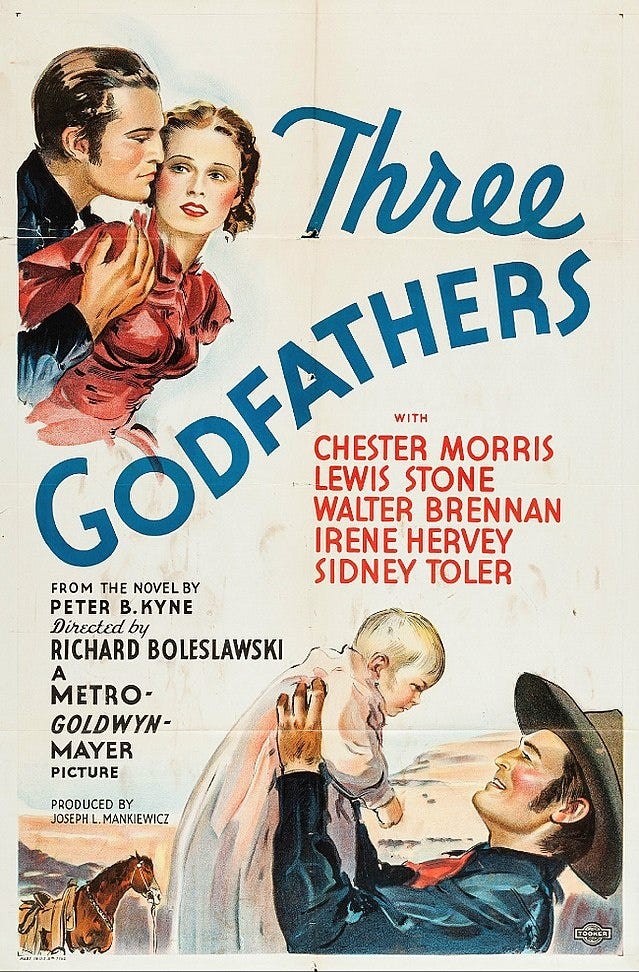
Three Godfathers (1936). Directed by Richard Boleslawski. With Chester Morris, Walter Brennan, Lewis Stone, Irene Hervey. Screenplay by Edward E. Paramore Jr. and Manuel Seff, from a novel by Peter B. Kyne. Cinematography by Joseph Ruttenberg. Black and white. 1 hr., 21 mins. Streaming on Tubi and YouTube.
In this Western tale of crime, atonement and sacrifice, four men stage a bank holdup in the desert town of New Jerusalem (which seems arbitrarily named since there is little to allude to the earthly city of God). The cashier is shot dead. In their frantic rush out of town, one bandit is shot off his horse. The other three escape without enough drinking water in their canteens to get them to the next town, eighty miles away. They find what looks like an abandoned covered wagon. But inside is a dying woman and her baby boy. Searching their souls they realize that the only way the baby will survive is if they carry it back to New Jerusalem on foot (since their horses ran off in the night) where they’ll certainly be hung. But can they make it? Chester Morris is Bob Sangster, the cruelest of the three, who must dig deepest to find his inner decency. Stone is Doc, a philosophical robber who reads Schopenhauer. Walter Brennan, of course, is one of film’s greatest character actors, and his role as Sam, the kindly, illiterate crook, is the strongest of the cast. The baby boy in the film is actually a girl, Jeanne Rivello, who never made another movie. Boleslawski’s film is a remake of William Wyler’s Western, Hell’s Heroes (1929, released as both a silent and a talkie), remade again as 3 Godfathers (1948) by John Ford, starring John Wayne, Pedro Armendáriz, and Harry Carey, Jr.
#
SOURCES:
Brook, David. “Valley of the Bees—Second Run.” Blueprint Review. https://bueprintreview.co.uk/2024/10/the-valley-of-the-bees-second-run/#respond. October 4, 2024.
Hoberman, J. “Goodbye, Dragon Inn (Tsai Ming-liang, 2002; Taiwan).” Film after Film: Or, What Became of 21st Century Cinema. Verso: 2012, 2013.
“Out of the past: Frantisek Vlácil.” BFI: Sight & Sound. BFI | Sight & Sound | Out of the past: Frantisek Vlácil.
Pfeifer, Morris. František Vláčil’s The Valley of the Bees (Údolí včel, 1968) eefb.org/retrospectives/frantisek-vlacils-the-valley-of-the-bees-udoli-vcel-1968/Vol. 2 (February 2011).
ACKNOWLEGEMENTS:
Thanks to Barry Voorhees for editing
Thanks to Tim Madigan for suggestions.
Text copyright © 2026 by Steven Huff
